Loading Dock Safety: Why Dock Levelers and Seals Matter
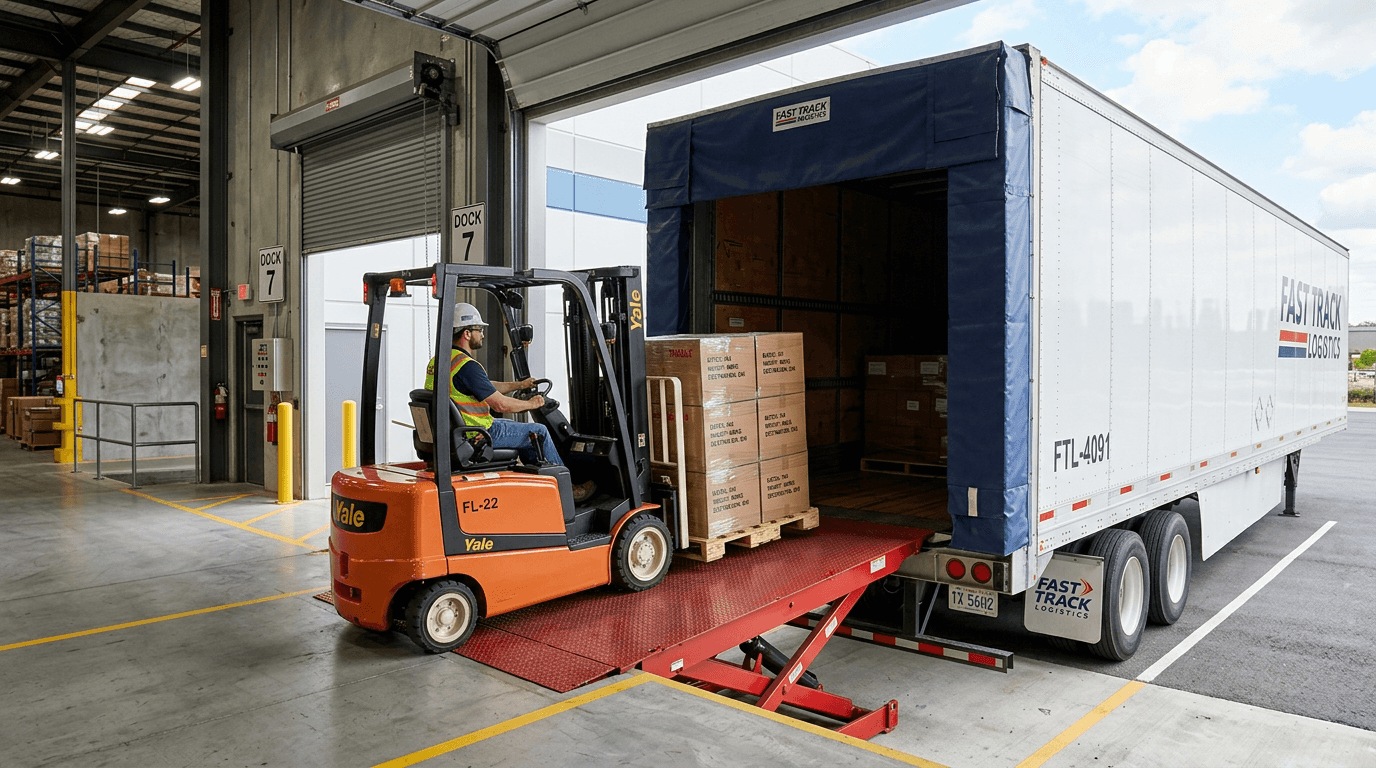
Loading docks are some of the most dangerous areas in any commercial facility. According to OSHA, approximately 25% of all industrial accidents occur at the loading dock. Forklifts crossing gaps, trailers separating during unloading, workers exposed to weather and exhaust, cargo shifting during transfer—the risks are constant.
Two pieces of equipment sit at the center of loading dock safety: dock levelers and dock seals. When properly installed and maintained, they eliminate many of the most common dock hazards. When neglected or inadequate, they become contributing factors to the accidents they're designed to prevent.
Why Loading Docks Are So Dangerous
Before diving into equipment specifics, it's worth understanding what makes docks high-risk:
- Height differential — Dock floors sit 48-52 inches above ground level. Forklifts and workers operate at this edge constantly.
- Gap between dock and trailer — The space between the dock edge and the trailer floor is where falls, tip-overs, and pinch injuries happen.
- Trailer movement — Trucks can creep forward during loading, shifting, or from forklift movement. This changes the gap and can cause the dock plate or leveler to lose contact.
- Weather exposure — Open dock doors expose workers to heat, rain, wind, and pest intrusion. Temperature swings affect cargo quality.
- Heavy equipment — Forklifts weighing 4,000-12,000+ pounds cross the dock-to-trailer transition repeatedly.
Dock levelers and seals directly address the most dangerous of these conditions.
Dock Levelers: Bridging the Gap Safely
A dock leveler creates a smooth, stable bridge between the dock floor and the trailer bed. Without one, you're relying on portable dock plates, makeshift ramps, or—worst case—forklifts jumping the gap.
How Dock Levelers Prevent Injuries
Eliminating the gap hazard:
- A properly functioning leveler covers the entire gap between the dock and trailer
- Workers and forklifts cross on a stable, rated surface instead of navigating a changing gap
- The leveler adjusts to different trailer heights, keeping the transition surface at a safe grade
Accommodating trailer height differences:
- Trailer bed heights vary from 44 to 62 inches depending on the vehicle
- Dock levelers accommodate this range, maintaining a safe working angle (ASHA recommends no more than a 5% grade for forklift operation)
- Without a leveler, workers attempt to bridge height differences with plates, boards, or by driving forklifts at steep angles—all serious hazards
Handling trailer creep:
- During loading, trailer springs compress as weight is added, lowering the bed
- During unloading, springs decompress, raising the bed
- A dock leveler's float feature compensates for this movement in real time, maintaining a consistent working surface
Types of Dock Levelers
Mechanical (manual):
- Operated by a pull chain or walk-on activation
- Lowest cost, simplest maintenance
- Requires physical effort from the operator
- Best for: Low-volume docks with occasional truck traffic
Hydraulic:
- Push-button operation with hydraulic cylinder lift
- Smooth, consistent positioning
- Automatic return to stored position
- Best for: Medium to high-volume docks, facilities prioritizing ease of use and safety
Air-powered (airbag):
- Inflatable bag lifts the leveler; gravity lowers it into position
- Lower maintenance than hydraulic (fewer moving parts and no hydraulic fluid)
- Energy efficient
- Best for: High-volume facilities, food processing (no hydraulic leak risk)
For a detailed comparison, see our guide on dock levelers and the differences between dock leveler types.
Dock Leveler Safety Features
Modern dock levelers include safety features that are often absent on older or poorly maintained units:
- Full-range lip — Extends to maintain contact with the trailer even as it shifts
- Velocity fuse — Prevents the leveler from free-falling if a hydraulic line fails
- Automatic return — Returns the leveler to the stored position when not in use, eliminating a trip/fall hazard
- Safety legs/maintenance struts — Lock the leveler in the raised position during maintenance, preventing it from lowering on a technician
- End-of-dock safety — Barrier that raises when no trailer is present, preventing forklifts from driving off the edge
Dock Seals and Shelters: Closing the Envelope
Dock seals and shelters close the gap between the building wall and the trailer, creating a weather-tight enclosure around the dock opening. They're often seen as a comfort or energy feature, but their safety impact is significant.
How Dock Seals Prevent Injuries and Losses
Environmental protection:
- Florida heat, rain, and humidity enter the facility through open dock doors
- Heat exposure is a direct workplace safety hazard—OSHA has increased enforcement of heat-related protections
- Rain on the dock floor creates slip hazards
- Proper dock seals block 90-95% of outside air infiltration when a trailer is docked
Pest exclusion:
- Open gaps between the trailer and the building are entry points for insects, rodents, and birds
- In food processing, pharmaceutical, and healthcare facilities, pest intrusion is a compliance failure
- Dock seals close these gaps, maintaining a controlled environment
Cargo protection:
- Temperature-sensitive goods (food, pharmaceuticals, chemicals) are exposed to Florida's heat during loading/unloading
- Products can spoil, degrade, or fall out of spec in the time it takes to load a trailer without climate control
- Dock seals maintain the cold chain by keeping conditioned air inside
Worker comfort and productivity:
- Workers loading trucks in 95-degree heat with no seal protection fatigue faster, make more mistakes, and are at higher risk for heat illness
- A sealed dock keeps the work area cooler, improving focus and reducing heat-related incidents
Types of Dock Seals and Shelters
Compression dock seals:
- Foam pads covered in durable fabric that compress against the trailer sides and top
- Create a tight seal with good energy efficiency
- Best for: Facilities where the same trailer size docks consistently
Dock shelters:
- Rigid or flexible frame that creates an enclosure around the trailer
- Accommodate a wider range of trailer sizes than compression seals
- Best for: Facilities receiving various truck sizes
Inflatable dock seals:
- Air-filled bags that inflate around the trailer for maximum seal
- Best seal quality with highest energy efficiency
- Best for: Cold storage, food processing, pharmaceutical—anywhere a tight seal is critical
Combination systems:
- Compression seals on the sides with a shelter curtain on top
- Balance versatility with seal quality
Visit our dock seals page for more on the options we install and service.
The Combined Safety Impact
Dock levelers and seals work together as a system. Here's what a properly equipped dock provides vs. one with missing or failing equipment:
| Hazard | Without Leveler/Seals | With Proper Equipment |
|---|---|---|
| Forklift crossing gap | High fall/tip-over risk | Smooth, stable transition |
| Trailer height mismatch | Steep angles, unstable plates | Automatic height adjustment |
| Trailer creep during loading | Gap changes, surface shifts | Leveler floats with movement |
| Weather exposure | Heat illness, slip hazards | Sealed, climate-controlled area |
| Pest intrusion | Open entry points | Sealed envelope |
| Cargo temperature damage | Product exposed to outside air | Cold chain maintained |
| Energy waste | Conditioned air escapes | 90-95% infiltration reduction |
| Dock edge fall risk | Open edge when no trailer | End-of-dock barrier protection |
OSHA Compliance and Loading Docks
OSHA doesn't have a single "loading dock standard," but several regulations apply:
- 29 CFR 1910.22 — Walking-working surfaces must be kept clean, orderly, and free of hazards (wet dock floors from rain, gaps, uneven surfaces)
- 29 CFR 1910.176 — Materials handling and storage, including proper use of mechanical handling equipment
- 29 CFR 1910.178 — Powered industrial trucks (forklifts) must be operated on surfaces adequate for the load and conditions
- General Duty Clause — Employers must provide a workplace free from recognized hazards. A dock without a leveler where forklifts regularly cross a gap could be cited under this clause.
Documentation matters. Maintaining inspection records for dock levelers, seals, and related safety equipment demonstrates compliance efforts. If an incident occurs, maintenance records are one of the first things OSHA and insurance companies review.
Maintenance Is Part of Safety
Equipment that isn't maintained is equipment that can fail when it matters most.
Dock Leveler Maintenance
- Monthly: Check for unusual noises, slow operation, lip not extending fully, or leveler not returning to stored position
- Quarterly: Lubricate hinges, check hydraulic fluid levels (hydraulic models), inspect lip and bumpers for damage
- Annually: Professional inspection of structural integrity, hydraulic system, safety features (velocity fuse, automatic return), and rated load capacity
- Immediately: Service if the leveler doesn't hold position, makes grinding noises, or operates erratically
See our complete guide on dock leveler maintenance.
Dock Seal Maintenance
- Monthly: Visual inspection for tears, compression loss, exposed foam, or missing sections
- Seasonally: Check that seals make full contact with parked trailers (no visible gaps)
- As needed: Replace worn or torn sections before they fail completely
- Watch for: Trailers dragging against seals at an angle (indicates guide line or approach issues)
When to Upgrade Your Dock Equipment
Consider upgrading if:
- Your levelers are mechanical and you've grown to high-volume operations — Hydraulic or air-powered levelers are safer and more efficient for frequent use
- Your seals are compression-only but you receive many different trailer sizes — A shelter or combination system provides better versatility
- You've added cold storage or temperature-controlled operations — Inflatable seals provide the best thermal barrier
- Your equipment is 15+ years old — Safety standards and features have improved significantly. Modern equipment includes protections that older units lack.
- You've had dock-related incidents or near-misses — Equipment limitations may be contributing factors
Protecting Your Dock, Your Workers, and Your Business
Loading dock safety isn't just about avoiding OSHA fines—it's about protecting the people who work there every day and the operations that depend on efficient, reliable dock performance.
Dock levelers and seals are foundational to that safety. When properly selected, installed, and maintained, they eliminate the most common and most serious dock hazards.
Paratec provides full loading dock services across Florida:
- Dock leveler installation and repair
- Dock seal and shelter installation
- Dock lift solutions
- Complete loading dock equipment services
Contact us today for a dock safety assessment. We'll evaluate your current equipment, identify gaps, and recommend solutions that keep your operations safe, efficient, and compliant.